01
Chuck capping strengths
Chuck cappers use cap-specific contact and can be effective where the closure needs positive engagement. They may be suited to controlled, repeatable applications where the cap is presented consistently.
UK screw capper route
Chuck and spindle capping machines both tighten threaded closures, but they suit different production layouts and cap behaviours. The best route depends on the closure, bottle stability, target speed and how caps are presented.
Selection notes
Chuck and spindle capping machines both tighten threaded closures, but they suit different production layouts and cap behaviours. The best route depends on the closure, bottle stability, target speed and how caps are presented.
Buying detail
Chuck cappers use cap-specific contact and can be effective where the closure needs positive engagement. They may be suited to controlled, repeatable applications where the cap is presented consistently.
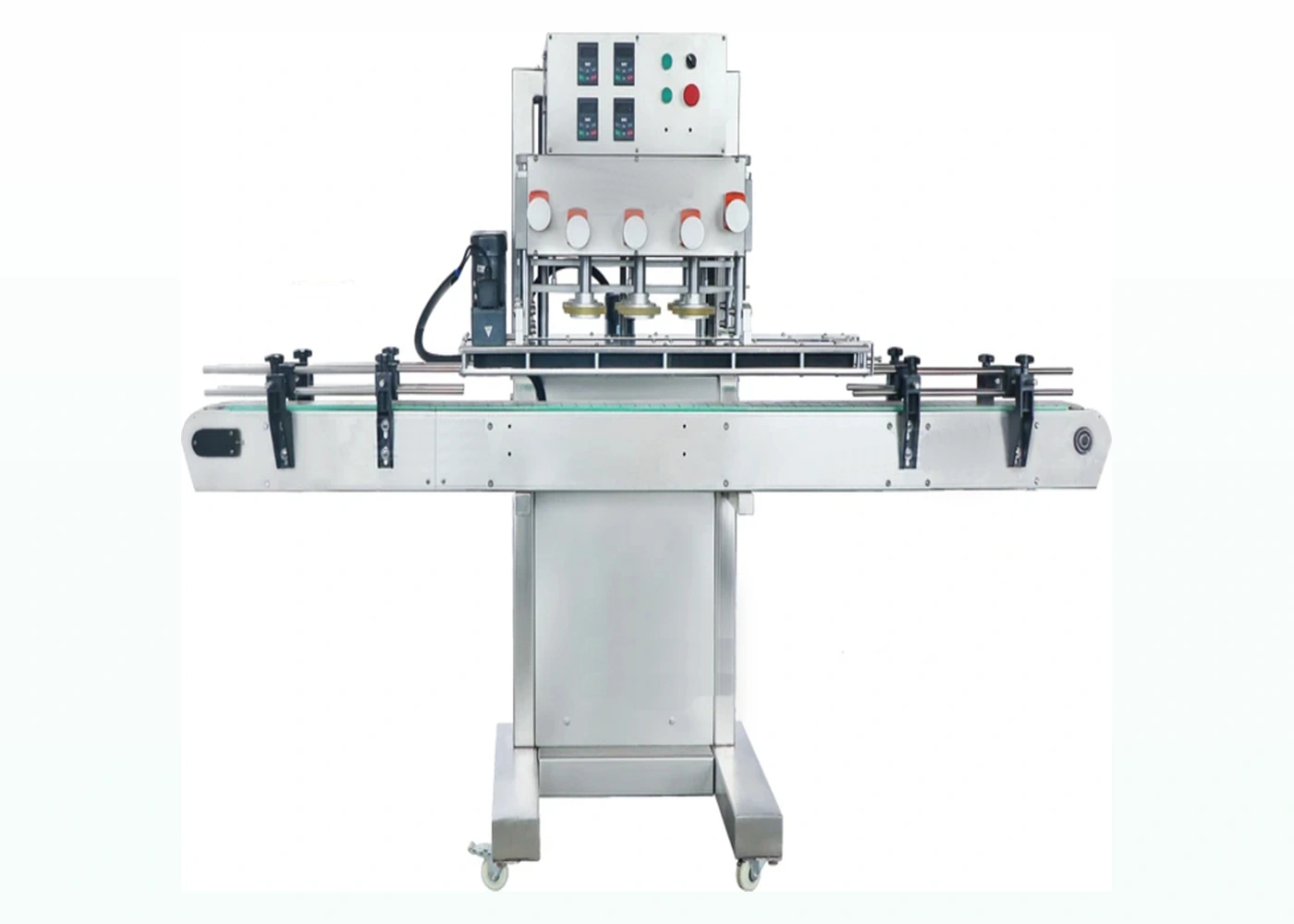
Spindle systems are often used on inline bottle lines where caps can be started and tightened as bottles move through the machine. They can be effective for repeatable round bottles and higher-output work.
The decision should be based on physical samples and the line requirement. Bottle stability, cap starting, torque target and changeover needs often matter more than the machine name.
Include cap diameter, closure type, bottle size, target output, available space and whether the capper needs to connect to filling or labelling equipment.
Related routes
Use this route to compare another part of the screw capping project and strengthen your enquiry brief.
Use this route to compare another part of the screw capping project and strengthen your enquiry brief.
Use this route to compare another part of the screw capping project and strengthen your enquiry brief.
Use this route to compare another part of the screw capping project and strengthen your enquiry brief.
Use this route to compare another part of the screw capping project and strengthen your enquiry brief.
Use this route to compare another part of the screw capping project and strengthen your enquiry brief.
FAQs
Suitability depends on cap type, bottle stability, target torque, output and whether caps are manually placed or automatically fed. Samples help confirm the correct route.
Send bottle and cap samples or drawings, cap diameter, bottle height and diameter, target output, product type, line layout and any changeover requirements.
Yes. Lancing UK can review the product, pack, closure and output requirement first, then help shortlist a practical screw capping route.
Complete comparison
Each route applies torque differently and places different demands on the operator, bottle support and cap-presentation system.
| Technology | Application method | Strengths | Limitations to test | Typical project evidence |
|---|---|---|---|---|
| Handheld cap tightener | Operator aligns the tool and closure on each pack. | Low complexity and flexible for trials or very small batches. | Operator variation, reaction force, bottle restraint and fatigue. | Cycle observation, torque repeatability and safe handling. |
| Bench/semi-automatic chuck capper | Operator places the cap; a fixture or clamp holds the bottle while one chuck tightens. | Controlled cycle, flexible tooling and clear operator inspection. | Manual placement pace, chuck release and clamp suitability. | Timed operator run, chuck sample, bottle support and format changes. |
| Automatic single-head system | Bottle is detected or indexed; one head tightens a manually or automatically placed cap. | Inline control and easier integration at regular mid-range output. | Cap handover, indexing/spacing, head cycle and queue recovery. | Line layout, sensors, cap feed method and sustained cycle. |
| Belt/spindle capper | Side belts control the bottle while several spindle contacts tighten a pre-placed cap. | Continuous flow and strong fit for repeatable higher-output formats. | Bottle stability, cap consistency, contact slip, feeder and pre-placement. | Full timed line run with cap replenishment and accepted closure checks. |
A chuck may use a clutch or controlled drive, while a spindle system builds tightening through several contacts. The accepted finished pack—not the nominal setting—should decide whether the process is correct.
Include cap misplacement, bottle queues and changeover in the trial. A faster cycle that creates difficult stops may produce less usable output than a simpler controlled route.
Comparison FAQ
A chuck capper grips one closure and tightens it in a defined cycle. A spindle capper stabilises a moving bottle and uses successive rotating contacts to tighten a pre-placed cap continuously.
A handheld or simple bench tool can suit very small batches and development work, but operator technique and bottle restraint still affect repeatability.
It usually operates in discrete cycles, but the relevant comparison is sustained production with cap placement, transfer and changeovers rather than head type alone.
A bench or single-head machine can be easier for unrelated formats. A spindle system can change efficiently within a validated family, but cap feeding, belts and spindle settings add scope.
Potentially. Chuck inserts or spindle contact materials must be tested for grip, slip and cosmetic marking on the exact closure.
Use representative bottles and caps in a timed run and assess thread engagement, cap height, torque or opening result, closure integrity, rejects and the full operator or feeder workflow.